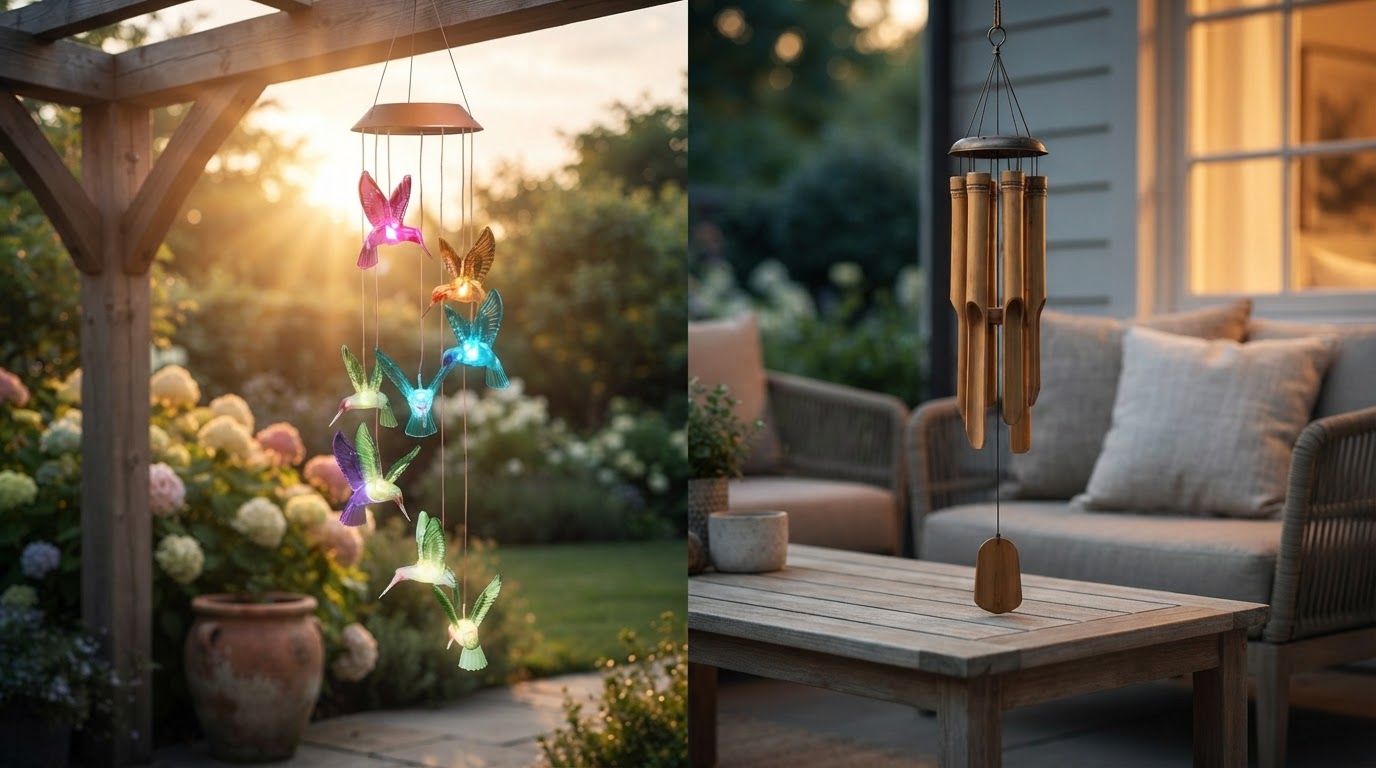
Why Choose Solar Hummingbird WindChimes Over Standards?
 Sam VasquezBuying Guide Lead
September 27, 2026 — Solar Hummingbird WindChimes provide a dual-purpose decorative solution that combines kinetic sound with automated LED lighting, whereas standard wind chimes prioritize acoustic precision and traditional materials like aluminum or bamboo.
Homeowners often find themselves choosing between the purely auditory experience of a classic chime and the visual utility of a light-up solar model. This decision usually comes down to whether you want a garden ornament that works only during the day or one that transitions into an evening focal point. Understanding the mechanical differences in wind catchers and strikers is essential for setting expectations regarding sound volume and lighting duration.
How does the sound of Solar Hummingbird WindChimes compare to metal chimes?
Solar Hummingbird WindChimes typically produce a lighter, more delicate tinkling sound compared to the deep, resonant tones of high-end metal chimes. The internal structure of a solar chime must accommodate a battery compartment and LED housing, which often results in a smaller resonance chamber than what you find in professional-grade musical instruments. According to Woodstock Chimes, their standard chimes are specifically musically tuned instruments played by the wind, emphasizing pitch and harmony. In contrast, solar models focus on the visual aesthetic of the bird icons, with sound acting as a secondary ambient feature.
If you're on a budget, a solar chime offers significantly more value per dollar because it functions as both a light fixture and a musical piece. However, standard chimes like those from Corinthian Bells are built for sustain and volume. Skip this if you are looking for a deep, Gregorian-style bass note; the acrylic hummingbirds on a solar chime are designed for high-frequency, gentle clinking that won't overwhelm a small patio or balcony. I have found that the lighter weight of solar wind catchers allows them to activate in lower wind speeds, often starting to move in breezes as low as six miles per hour, a threshold noted by In My Own Style as ideal for smaller outdoor spaces.
Which chime type is better for evening garden ambiance?

Photo by Veronika Andrews on Pexels
Solar Hummingbird WindChimes are the superior choice for evening ambiance because they utilize integrated photovoltaic cells to power color-changing LEDs that standard chimes lack. A standard chime becomes invisible once the sun sets, requiring external spotlights if you wish to see it. Between these two, I’d go with the solar version for any area near a seating group or window where you spend time after dark. The ability to cycle through colors provides a visual rhythm that complements the auditory one, creating a multi-sensory environment that a plain metal tube cannot replicate.
Here's what I'd actually buy: for a front porch where I want to greet neighbors with clear, loud music, I'd stick to a traditional 36-inch metal chime. But for a private backyard retreat or a garden bed, the Solar Hummingbird WindChimes are my preference because they solve the problem of dark corners while providing a pleasant, non-intrusive sound. Research from social hobbyist groups suggests that chimes under 30 inches in height, common for solar models, are perfect for most residential settings where space and noise ordinances are factors. The solar model provides a utility that standard chimes simply don't offer: six to eight hours of automated light without increasing your electricity bill.
Quick answers
Q: Do solar wind chimes need direct sunlight to function? / A: Yes, Solar Hummingbird WindChimes require at least 6 to 8 hours of direct exposure to charge the internal Ni-MH battery for full nighttime brightness. If placed in deep shade, the LEDs will dim significantly or fail to turn on at dusk.
Q: Which material lasts longer, solar acrylic or standard metal? / A: Standard metal chimes, particularly those made of treated aluminum or steel, generally have a longer lifespan of 5 to 10 years. Solar models contain electronic components and plastic housings that may need replacement or battery swaps every 2 to 3 years depending on weather exposure.
Q: How much wind is required to make a solar hummingbird chime sound? / A: Most Solar Hummingbird WindChimes are designed with lightweight sails that catch breezes as low as 5 to 7 mph. This makes them more reactive in sheltered areas compared to heavy, large-scale professional chimes that may require 10+ mph winds to move the striker.
Learn more about how to choose solar wind chimes or explore solar powered bird wind chimes for patio use. For those focused on aesthetics, compare these to Solar Hummingbird WindChimes for evening garden ambiance.
Learn more about Solar Hummingbird WindChimes at https://solyrahummingbird.com.
Sources

Photo by Daniel Sarmiento on Pexels
- Hear the Difference - Woodstock Chimes
- How to Choose the Perfect Wind Chime For Your Outdoor Space
- Best Wind Chimes in 2026 - Top 7 Picks for Sound, Style, and Material